· 5 min read
Divisionism Was Painting Before Pixels
cultural-thread

The Grimoire is not a manual. It is a cross-pollination engine that turns stored concepts into speculative artifacts, image seeds, and daily creative prompts.
The Grimoire recently generated a card called Molten Kiltie Forge.
It described melting copper ore, pouring it into a silicone mold shaped like a kiltie loafer sole, then pressing leather into the glowing cavity so the materials fused into one veined tread.
My first reaction was simple:
Is that actually a thing?
It is not.
As a real fabrication process, it falls apart immediately. The materials do not behave that way. The process is not physically believable. If you read it as a workshop method, it is nonsense.
Then I turned it into an image anyway.
That is when the point became obvious.
The Grimoire was not failing at factual instruction. It was succeeding at something else.
It had produced a speculative artifact. A fictional process with enough structure, texture, material logic, and visual tension to become a compelling image.
That was the moment the feature clicked into place.
The Grimoire is not a manual. It is not a how-to engine. It is a creative entertainment and cross-pollination system that takes stored concepts from the archive and recombines them into strange new artifacts.
Some of those artifacts are plausible. Some are impossible. Some are funny. Some are cursed. Some are immediately useful.
And sometimes a bad recipe becomes a very good image.
The Grimoire stores concepts, visual atoms, motifs, materials, domains, objects, coverings, body parts, lighting conditions, and other ingredients that can be recombined.
Its “Cross-Pollinations on Record” are not encyclopedia entries and not technical tutorials. They are creative synthesis cards.
Each card fuses archived concepts into a short speculative prompt. The result might resemble a process, a product, a ritual object, a design study, a fashion fragment, a creature mutation, or a material experiment.
The correct question is not only:
Is this true?
The better question is:
What kind of thing is this?
In the case of Molten Kiltie Forge, the answer was clear. It was not a real workshop method. It was a visual seed.
The sequence mattered.
First, the Grimoire generated something that looked like a recipe.
Then I checked whether it had any real-world basis.
It did not.
Then I rendered the concept as an image.
That changed the frame completely.
The output was no longer trying to compete with metallurgy or shoemaking. It was behaving like a design fiction artifact. It had enough internal logic to make a picture: crucible glow, cast cavity, leather grain, copper veining, foundry surface, luxury shoe silhouette.
The process was false.
The image was real.
That is the rule.
A false recipe can still be a real image.
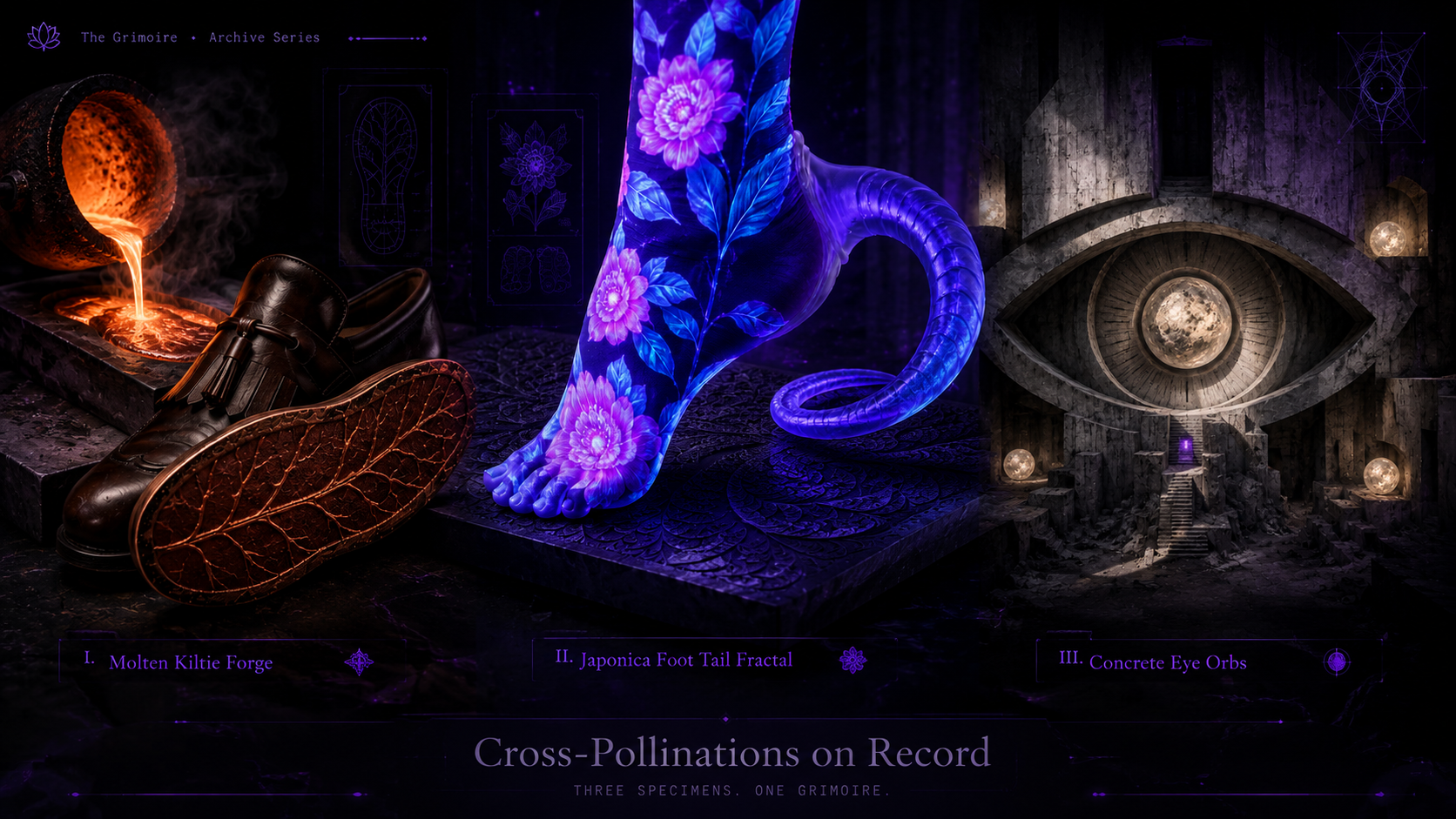
These are the first three Grimoire posts currently on record.
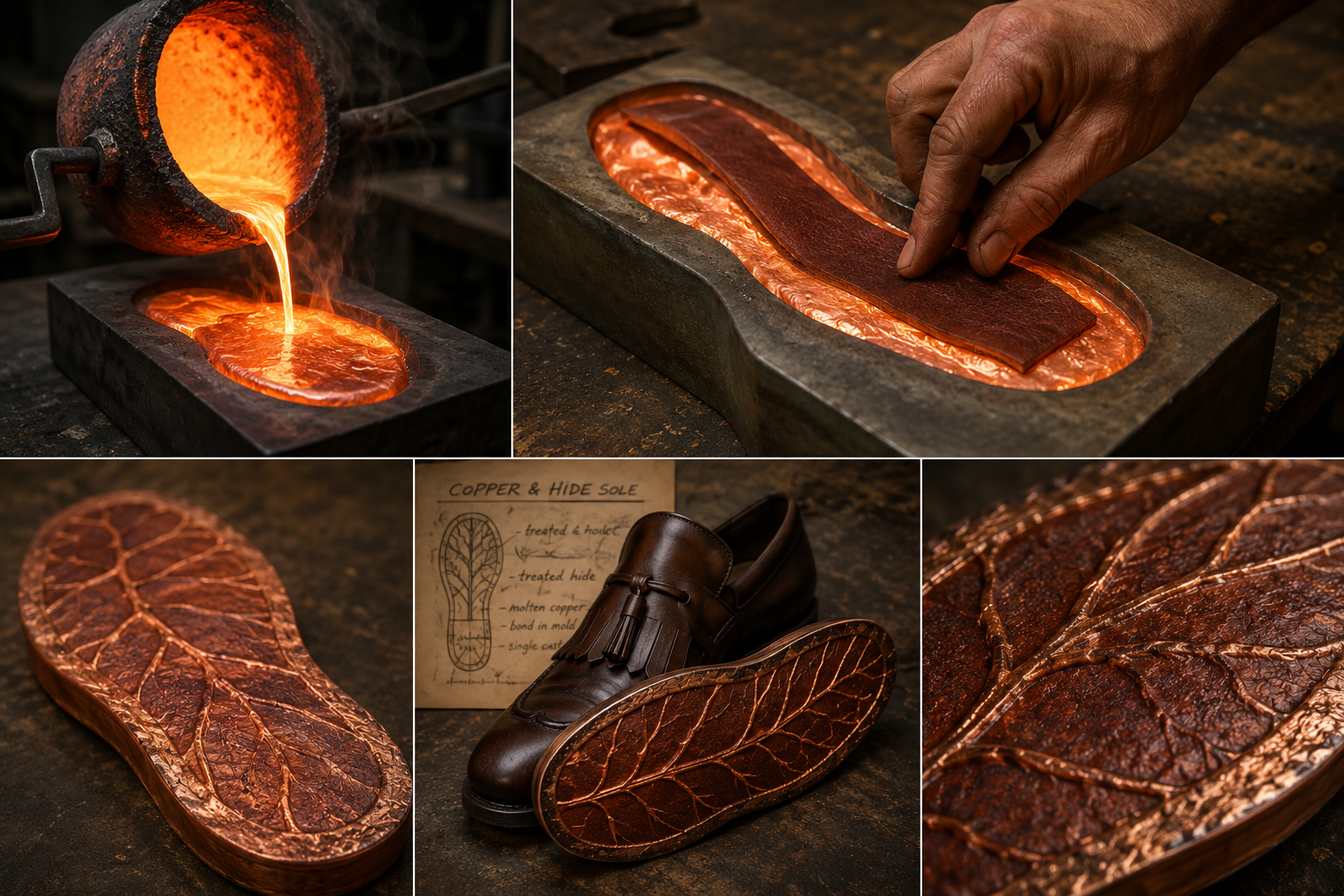
Molten Kiltie Forge Heat copper ore in a crucible until it liquefies, then pour it into a silicone mold shaped like a kiltie loafer sole. While the metal glows, press a thin strip of treated leather into the cavity so it bonds and forms a flexible, veined tread. The result is a single-cast shoe where ore and covering become one, the metal grain shining through the leather’s texture.
This is the cleanest example because the contradiction is so obvious.
It reads like a fabrication method, but it is really a fused image logic:
As a literal process, it fails.
As a speculative product image, it works.
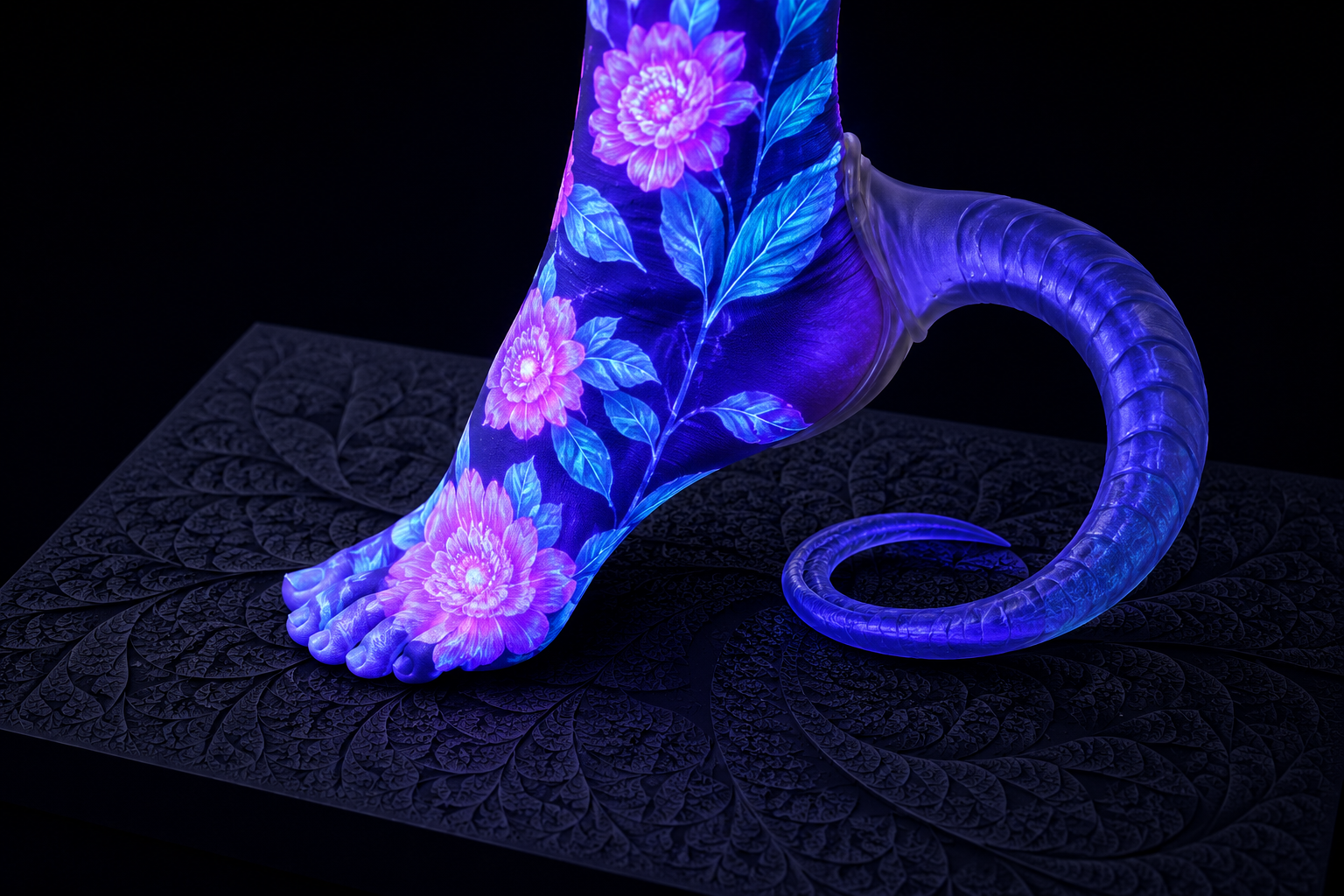
Japonica Foot Tail Fractal Wrap a model’s right foot in silk printed with a high-contrast Camellia japonica blossom pattern. Position the foot on a matte black panel printed with a recursive fractal leaf tessellation generated at 300 dpi. Attach a flexible silicone tail prosthetic to the ankle, curl it around the heel, and illuminate the scene with a UV lamp to make the silk’s bioluminescent sap-like ink glow while the fractal leaves absorb the light.
This one makes the system’s strengths even clearer.
It is not pretending to describe a real consumer product. It is generating a fashion-specimen object. It contains:
That is exactly the kind of structured weirdness that turns into strong image work.
The result feels like editorial fashion, specimen photography, biotech styling, and surreal body ornament all at once.
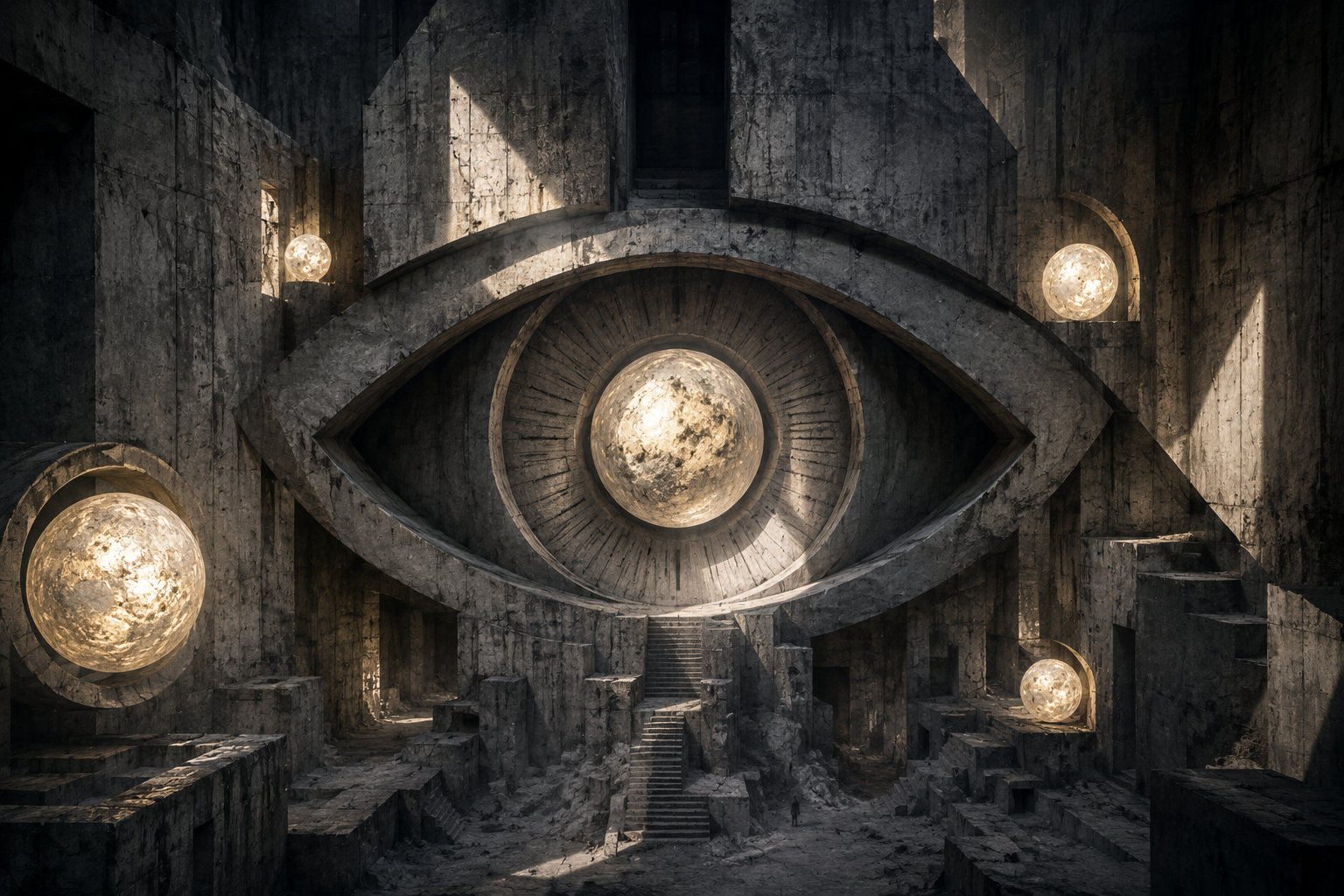
Concrete Eye Orbs Light orbs suspended in concrete, their glow casting angular becket silhouettes. The eye is both quarry and cathedral, carved from the same dense material.
This one is shorter, but it proves the same point from another angle.
Instead of a process, it gives a compact image thesis:
It reads like an installation, a ruin, a monument, or a worldbuilding fragment.
Again, the value is not whether the sentence describes a real thing in the world. The value is that it defines a visual object strongly enough to become one.
The Grimoire is not useful because every output is correct in the way a technical manual is correct.
It is useful because it can produce specific collisions you would not have arrived at by asking for a generic “cool image.”
That matters.
A lot of image prompting fails because it stays vague. It asks for style, mood, or aesthetics without supplying enough object logic. Cross-pollination fixes that by creating tension between domains.
Smelting plus loafers. Japonica silk plus foot prosthetic plus fractal display. Concrete cathedral mass plus eye geometry plus glowing orbs.
These are not just random combinations. They are concept packages.
That makes them productive.
A good cross-pollination card can become:
That is the real value of the feature.
The first version of this archive risked being misread.
If a card sounds process-shaped, readers may assume it is making a factual claim or offering real instructions. That is not what the feature is for.
So this post is partly a clarification and partly a design note.
The Grimoire’s cross-pollinations are intended to be read as:
Not as:
That distinction should be visible in the product itself, not just explained later in a blog comment or FAQ.
That realization has already started changing the system.
The current work on the Grimoire and the website is moving toward clearer framing, clearer labeling, and better public presentation.
The website side comes first.
The goal is to make Cross-Pollinations on Record feel intentional from the start, with clear language explaining that these are speculative archive artifacts generated from stored concepts. The cards should still feel strange, dark, and alive, but they should no longer look like accidental fake tutorials.
That means improving things like:
The Grimoire side will follow by improving the underlying output structure itself, so future cards carry better metadata about what kind of object they are and how they are meant to be used.
That is the right arc for the feature.
Not less weird. Not more defensive. Just more accurate about what the weirdness is for.
The Grimoire is not only storing ideas.
It is mutating them.
That matters because archives usually get treated as passive libraries. I want this one to act more like a seed vault, sketchbook, mutation engine, and entertainment layer all at once.
A daily cross-pollination gives the archive a pulse. It proves the database is not sitting still. It is actively recombining its own contents into new artifacts.
Some of those artifacts will be dead ends.
Some will be jokes.
Some will be one-image curiosities.
Some will become larger systems: blog posts, gallery drops, process articles, product mockups, social series, and course material.
That is exactly the point.
The image does not have to prove the object is buildable.
It only has to prove the concept is productive.
These three posts are the beginning, not the finished version.
As the Grimoire and the website improve, the cross-pollinations will get better at declaring what they are, why they connect, and what kind of media they are best suited for.
That opens up a larger content pipeline:
That is the system I am building.
Not a machine for being correct all the time.
A machine for generating useful strange matter.
And in that system, a false recipe can still be a real image.